

IMPLEMENTATION OF INTEGRATED DISEASE (COMMUNICABLE & NON-COMMUNICABLE) SCREENING SERVICES IN FIVE HIGH-VOLUME HEALTH FACILITIES IN RIVERS STATE
Article Sidebar
Abstract Views | PDF/EPUB Download:
1552
/ 421
/ 226
Main Article Content
Abstract
Introduction: Common communicable diseases make the double burden of disease in sub-Saharan Africa an issue of public health interest, especially in the possibility of their existence as co-morbidities. Access to testing services is an essential first step in the care cascade to improving health outcomes while screening seamlessly, stigma-free and contemporaneously at initial clinical encounters. This study aims to show the implementation of integrated disease (communicable and non-communicable) screening services at selected high-volume health facilities in Rivers State.
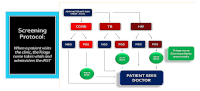
Methods: Implementation science (cross-sectional descriptive) research that considered novel evidence-based strategies to promote the integrated disease screening services in five selected high-volume facilities in Rivers State from 1st January 2022 to 30th June 2022. An integrated Risk Stratification Tool (iRST) for COVID-19, HIV, and Tuberculosis was used as well as screening for hypertension, diabetes, and obesity.
Result: Clinic attendance for six months was 35,130. Patients who had blood pressure, blood glucose and BMI checks were 30,836, 21,791, and 10,461 respectively. The number of patients comments tested with confirmed elevated values was 5057 (16.4%) for blood pressure; 2033 (9.3%) for blood sugar, and 210 (2%) patients with abnormal BMI. About 1.1%, 1.7% and 1.2 % were newly diagnosed with hypertension, diabetes, and obesity, respectively. Thirty-six patients had co-infections from COVID, HIV, and TB. Of those eligible for vaccination, 19,859(53.7%) got vaccinated.
Conclusion: Simultaneously testing for common diseases (communicable and communicable) was achievable in clinical settings. It can aid the early diagnosis of diseases and, consequently, lead to early treatment interventions, especially in co-infected patients. This can produce better health outcomes, reduce the disease burden, and engender system resilience.
Downloads
Article Details
Issue
Section

This work is licensed under a Creative Commons Attribution-NonCommercial-ShareAlike 4.0 International License.
Articles published in the journal are licensed under the Creative Commons Attribution 4.0 International License (CC BY 4.0). This license permits users to read, download, copy, distribute, print, search, or link to the full texts of the articles, and to use them for any lawful purpose, provided that appropriate credit is given to the original author(s) and the source.
How to Cite
Share
References
1.Tamuzi JL, Ayele BT, Shumba CS, Adetokunboh OO, Uwimana-Nicol J, Haile ZT, et al. Implications of COVID-19 in high-burden countries for HIV/TB: A systematic review of evidence. BMC Infect Dis. 2020;20(1):1–18.
2.World Health Organization. INTERIM POLICY ON COLLABORATIVE TB / HIV ACTIVITIES Stop TB Department and Department of HIV / AIDS. Who/Htm/Tb/2004.330 Who/Htm/Hiv/2004.1. 2004.
3.UNAIDS. Preliminary UNAIDS 2021 epidemiological estimates: GLOBAL HIV STATISTICS. Ending the AIDS epidemic. 2021. p. 1–5.
4.World Health Organization. Global Tuberculosis Report 2021. 2021.
5.Bertagnolio S, Thwin SS, Silva R, Ford N, Baggaley R, Vitoria M, et al. Clinical features and prognostic factors of COVID-19 in people living with HIV hospitalized with suspected or confirmed SARS-CoV-2 infection. 11th IAS Conference on HIV Science. 2021.
6.Gralinski LE, Baric RS. Molecular pathology of emerging coronavirus infections. J Pathol. 2015;235(2):185–95.
7.Luke E, Swafford K, Shirazi G, Venketaraman V. TB and COVID-19: An Exploration of the Characteristics and Resulting Complications of Co-infection. Front Biosci - Sch. 2022;14(1).
8.Madewell ZJ, Yang Y, Jr IML, Halloran ME, Dean NE. Active or Latent tuberculosis increases susceptibility to COVID-19 and disease severity. medRxiv. 2020;(165):1–13.
9.Ogimi C, Waghmare AA, Kuypers JM, Xie H, Yeung CC, Leisenring WM, et al. Clinical significance of human coronavirus in bronchoalveolar lavage samples from hematopoietic cell transplant recipients and patients with hematologic malignancies. Clin Infect Dis. 2017;64(11):1532–9.
10.Ogimi C, Englund JA, Bradford MC, Qin X, Boeckh M, Waghmare A. Characteristics and outcomes of coronavirus infection in children: The role of viral factors and an immunocompromised state. J Pediatric Infect Dis Soc. 2019;8(1):21–8.
11.Sy KTL, Haw NJL, Uy J. Previous and active tuberculosis increases risk of death and prolongs recovery in patients with COVID-19. Infect Dis (Auckl). 2020;52(12):902–7.
12.West Cape Department of Health. Western Cape: COVID-19 and HIV/ Tuberculosis. Known risk factors from other settings. 2020.
13.Ruhwald M, Hannay E, Sarin S, Kao K, Sen R, Chadha S. Considerations for simultaneous testing of COVID-19 and tuberculosis in high-burden countries. Lancet Glob Heal. 2022;10(4):e465–6.
14.World Health Organization. Global Strategy on People-Centred Integrated Health Services: Interim Report. Service Delivery and Safety. 2015.
15.RACP. Physicians and Integrated Care Discussion Paper. p. 1–20.
16.Department of Health, Western Cape. Health Service Integration : What works Health System Integration. Provincial Research Day. 2012;
17.Ansa GA, Walley JD, Siddiqi K, Wei X. Assessing the impact of TB/HIV services integration on TB treatment outcomes and their relevance in TB/HIV monitoring in Ghana. Infect Dis Poverty. 2012;1(1):1–8.
18.Burnett SM, Zawedde-Muyanja S, Hermans SM, Weaver MR, Colebunders R, Manabe YC. Effect of TB/HIV integration on TB and HIV indicators in rural Ugandan health facilities. J Acquir Immune Defic Syndr. 2018;79(5):605–11.
19.Nigeria National Bureau of Statistics. Annual Abstract of Statistics 2016. Niger Natl Bur Stat. 2017;1(July).
20.Bigna JJ, Noubiap JJ. The rising burden of non-communicable diseases in sub-Saharan Africa. Lancet Glob Heal. 2019;7(10):e1295–6.
21.Thomas S, Sagan A, Larkin J, Cylus J, Figueras J, Karanikolos M. Strengthening health systems resilience, Key concepts and strategies. European Observatory of Health Systems and Policies. WHO Regional Office for Europe and European Observatory on Health Systems and Policies. 2020. p. 33.